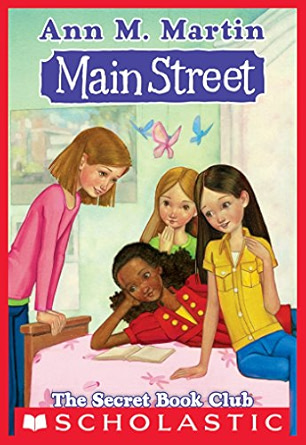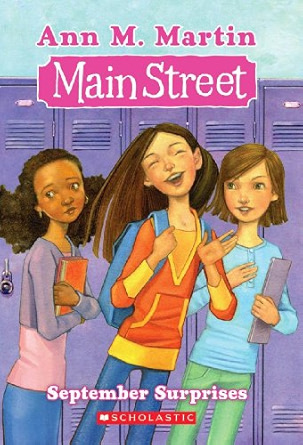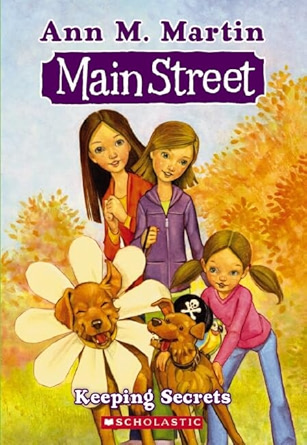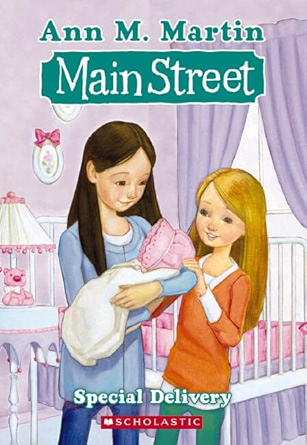
Main Street Books in Order
This reading order guide provides the complete list of Main Street books in order, from the very first to the latest, so you won’t miss anything!
About the Main Street Series
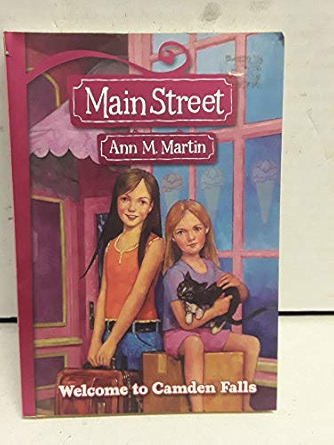
The Main Street series has 10 books, and they were all written by Ann M. Martin – who also wrote The Baby-Sitters Club – however, this series is noticeably unlike that earlier work. It’s more unhurried, gentler, and manages to be deeply affecting emotionally, in a manner that’s difficult to describe before actually reading it. The plot begins with sisters Flora and Ruby losing both parents and going to live with their grandmother, Min, in a little town, Camden Falls. Just that premise is enough to pull a person in, as there’s something about children attempting to reconstruct their lives completely that appeals to many.
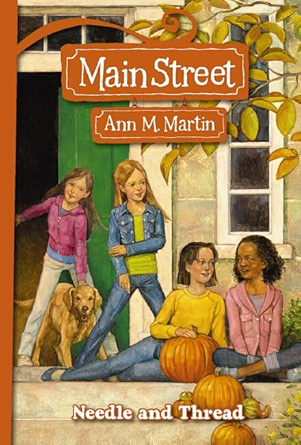
Camden Falls doesn’t read like a made-up place, and that is truly one of the series’ strengths. A shop, Needle & Thread, is on Main Street, the row houses are close enough that residents really do know what everyone else is doing, and the town’s communal happenings feel sincerely pleasant, rather than merely decorative. It is the sort of locale that makes a reader want to go there, or perhaps even recognise from somewhere in their own experience.
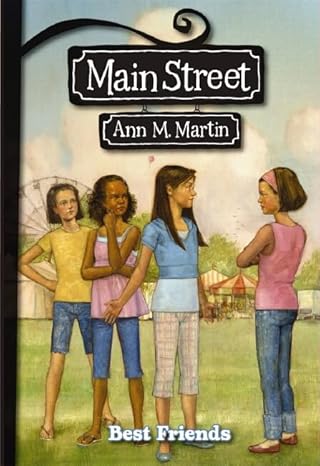
The four girls at the story’s core – Flora, Ruby, Olivia and Nikki – are very different individuals. Olivia prefers order and organisation. Nikki’s family situation is challenging, and much of what she encounters will strike a chord with a great many readers. Ruby is boisterous and dramatic and fully resolved to be in every school play she can. Flora is the one who quietly keeps much of this going. Their friendship is not flawless, and it is precisely that which makes it work so well in the books.
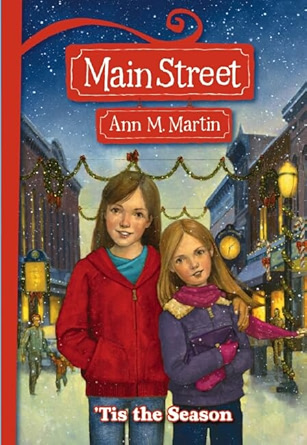
A feature of the books which makes reading them sequentially so rewarding is the way the narrative moves with the year. Summer, fall, the holidays, spring – each volume presents a fresh season, and that cadence gives the whole series the sense that actual time is passing. At the conclusion, it genuinely feels as if one is witnessing these characters mature over a year, which is not an achievement common to every middle-grade series.
The books also address topics that are not easy – bereavement, financial difficulty, complex family problems, intimidation, and the odd isolation of beginning anew in a new location. But none of these are dealt with in a way which is overly bleak or oppressive. Warmth, humour and authentic instances of improvement are always present. That equilibrium is what causes people to return to the series and what distinguishes it from other works of the same sort.
For anyone reading these for the very first time, or for anyone returning to them after a long interval, the Main Street books have a habit of remaining in the memory for a long time after the final page. They serve as a reminder that community is genuine, that good friends make it possible to endure hardship, and that ‘home’ does not have to be where one was born – it can be the location which gradually begins to feel as if it is where one belongs.
Main Street Books in Publication Order